PLAN YOUR TRIP · GETTING THERE
How to Get to and Around Hallstatt
Train and ferry, bus, car, day tour or transfer: which way to reach Hallstatt suits you, how the station ferry works and where drivers must park.
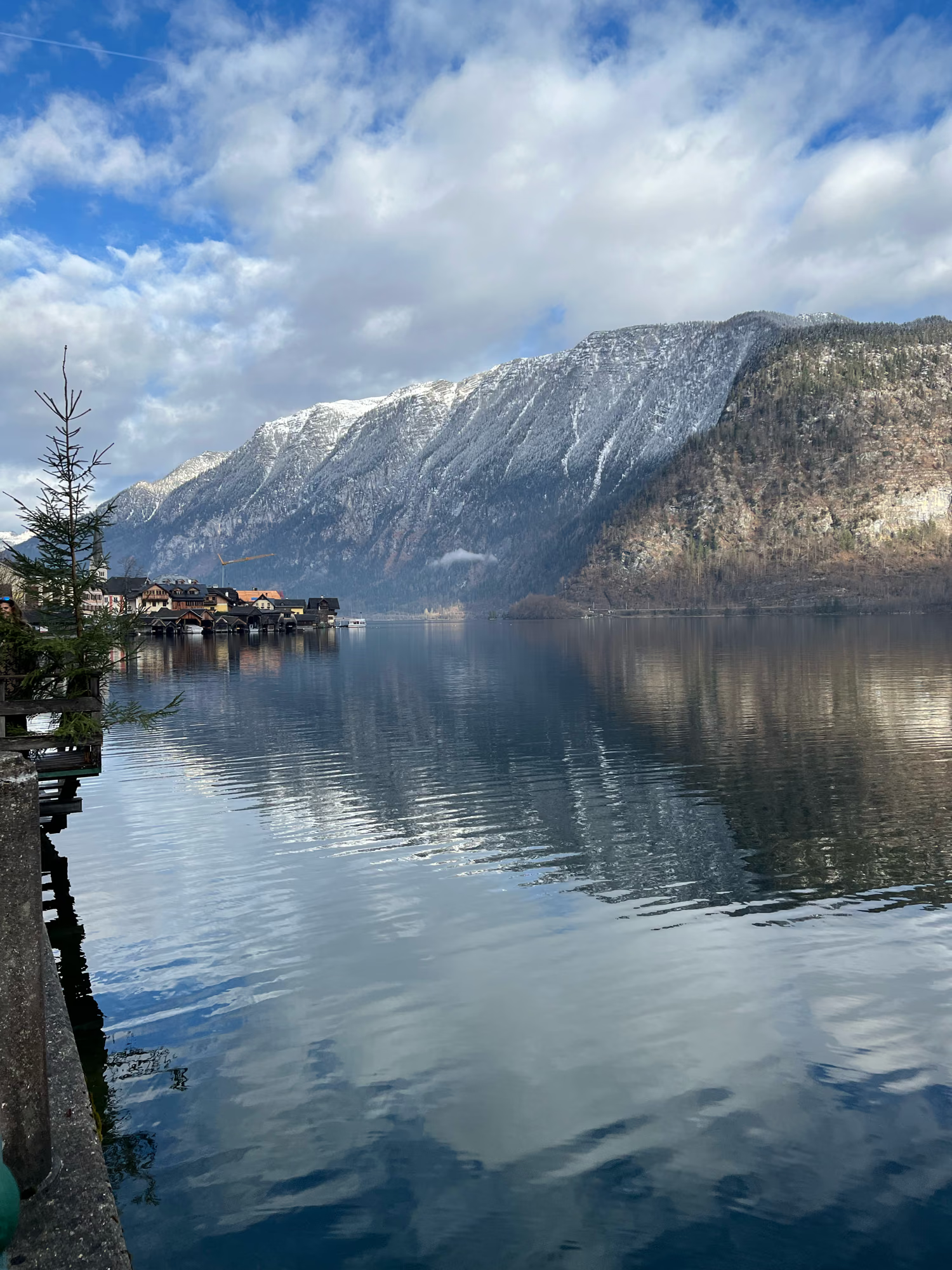
There are three ways into Hallstatt village. By train you arrive at Hallstatt station on the opposite shore and cross on a small ferry timed to the trains. By bus you get off at Hallstatt Lahn at the southern end of the village. By car you park in the official P1 or P2 car parks and walk in, because the centre is closed to traffic.
Hallstatt sits on a narrow strip between the Hallstätter See and a steep mountainside. That geography decides everything about transport: the railway runs along the far shore, the main road goes through a tunnel behind the village, and there’s no room for cars in the lanes. Once you know that, the rest is choosing which approach suits your budget, your luggage and how long you can stay.
This hub gives you the overview and sends you to the detailed page for your route. If you already know how you’re travelling and want to fill the days, start with everything worth doing in Hallstatt instead.
Your transport options at a glance
Train plus ferry is the best all-round choice; driving suits people touring the region. We’ve left out times and fares on purpose: they change by season and day of the week, and the official planners are the only reliable source.
| Option | How it works | Best for | Not ideal for |
|---|---|---|---|
| Train + ferry | ÖBB train to Hallstatt station, then the ferry across the lake | Travellers from Vienna, Linz or Salzburg; anyone avoiding parking | Very late arrivals; people who hate changes |
| Bus | Bus 150 from Salzburg to Bad Ischl, then a regional bus to Hallstatt Lahn | Salzburg-based visitors who want a scenic route past the Wolfgangsee | Heavy luggage; evening returns |
| Car | Drive to the P1 or P2 car parks and walk in | Road trips around the Salzkammergut; families with gear; stays in Gosau or Obertraun | Day trips in July, August and on Advent weekends |
| Day tour | Coach or minibus tour, usually from Salzburg or Vienna | First-timers with one day and no wish to plan | Anyone who wants early mornings or evenings in the village |
| Private transfer | Driver from a city, airport or hotel to the car park or your accommodation | Groups, luggage, children, late flights | Tight budgets |
By train and ferry
The train gets you to the opposite shore; a ferry does the last stretch. Hallstatt station is on the Salzkammergut line, and the tourism board’s rail page describes the usual route from Vienna: an ÖBB train (for example a Railjet) to Attnang-Puchheim, then the regional Salzkammergut train towards Hallstatt. From Salzburg you take the same change at Attnang-Puchheim.
The station itself is little more than a platform. The ferry pier is about two minutes’ walk below it, and the boat crosses to Hallstatt Markt in the village centre. The ferry operator says it runs daily, 365 days a year, timed to the trains, and that departures can shift if a train is late. As of November 2026 it takes cash only.

Two practical points people miss. First, check the last ferry of the day before you book an evening train, because the boat, not the train, is the bottleneck. Second, keep euros in coins or small notes for the crossing. Our guide to the station across the lake walks through both directions step by step, including what to do if you miss the boat.
Use the ÖBB journey planner for train times; it shows the regional connections too.
By bus
From Salzburg, the bus is often simpler than the train. The tourism board’s bus page describes it: line 150 runs from Salzburg’s main station past the Fuschlsee and Wolfgangsee to Bad Ischl, hourly and at times half-hourly. In Bad Ischl you change to a regional OÖVV bus, with a further change at the Gosaumühle stop, to reach Hallstatt Lahn, the central stop for visitors.
Line numbers on the Bad Ischl to Hallstatt leg have changed over the years and differ between sources, so search your trip on the OÖVV planner rather than memorising a number. The same page warns that evening buses from Bad Ischl towards Hallstatt stop early, which matters if you plan a late return.
Our guide to the bus and train from Salzburg compares the two side by side and explains when each one makes sense.
By car
You can drive to Hallstatt but not into it. The centre is closed by two barrier systems, and even guests of central hotels park outside and take a shuttle, according to the official parking page as of November 2026.
What drivers need to know:
- P1 is a multi-storey garage open all year; P2, next to the salt-mine funicular, opens in spring, summer and autumn.
- Day-visitor spaces can’t be booked. Electronic boards on the approach show free spaces per car park.
- Austrian motorways need a vignette, and the tourism board lists a warning triangle and hi-vis vests as required kit (arrival page).
- In high season, arriving after mid-morning risks a full car park and no plan B.
Read where you can actually park for car-park locations, current tariffs, the hotel ticket and coach rules.
By bike
Cycling in is a real option in the warmer months. The tourism board’s arrival pages cover coming by bike, and the official parking page lists free bicycle parking, with luggage storage for cyclists charged by the hour (as of November 2026). It suits fit riders coming from Bad Goisern or Obertraun more than anyone attempting the whole way from Salzburg in a day. Bikes also travel on the ferry for a fare, so you can combine a ride with the train.
Day tours and private transfers
A day tour is the zero-planning option; a transfer is the comfortable one. Tours run mainly from Salzburg and Vienna, often combining Hallstatt with another lake or a viewpoint. You get transport and timing handled, but you arrive with everyone else and leave before the village goes quiet. Our comparison of a day tour or going on your own helps you decide.
A private transfer makes sense for three or more people, families with small children, heavy luggage or a late flight into Salzburg or Vienna. Ask the driver to drop you at the P1 shuttle point or your accommodation outside the centre; they’re bound by the same barriers as everyone else.
Coming from Salzburg, Vienna or Munich
Salzburg is the closest gateway, Vienna the longest, Munich somewhere between by road. Each has its own guide:
- Salzburg. Bus or train, roughly half a day for the return trip on its own. A day trip works if you leave early, and the bus and train guide above has the detail.
- Vienna. Train via Attnang-Puchheim plus the ferry. Possible as a day trip, but long; most people are happier with one night. See the route via Attnang-Puchheim for the full journey.
- Munich. Train via Salzburg, or drive. As a day trip it leaves very little time in the village. See coming from Bavaria.
Salzburg is also the nearest major airport. Vienna and Munich airports have more long-haul flights but add a longer onward journey, which tilts the case towards spending at least a night in the area.
Getting around once you’re there
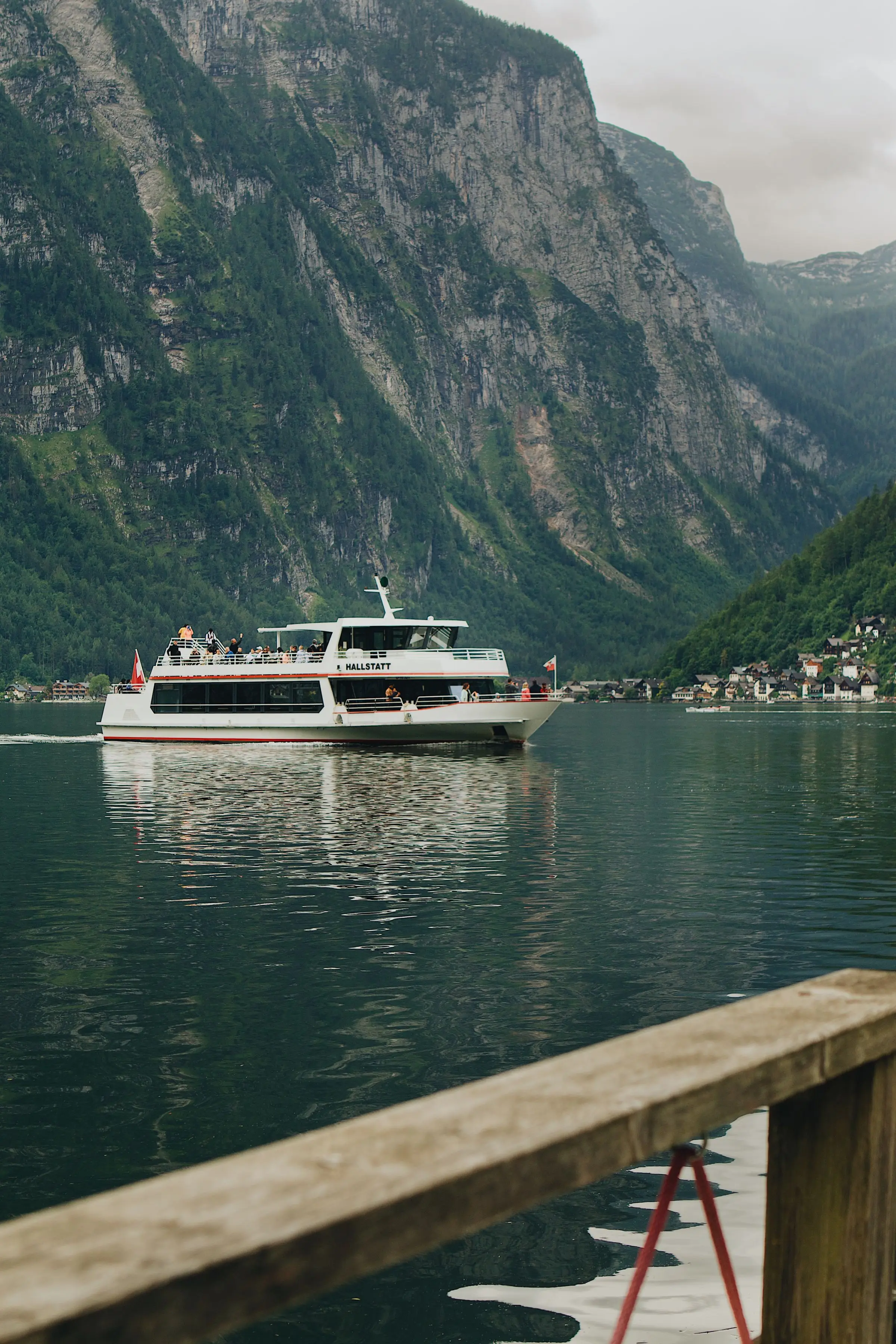
Walk. Hallstatt is small and mostly car-free, and the lakeshore lanes link the market square, the churches and the salt-mine funicular. From P1 it’s about 20 minutes on foot to the centre, from P2 about 15, according to the parking operator.
A few things help:
- Wear proper shoes. Lanes are steep in places and icy in winter.
- Use the regional bus for Obertraun and the Dachstein cable car area, and for Gosau. Check the OÖVV planner for stops.
- Get out on the water. The ferry is transport, but boat trips and electric-boat hire are their own outing in the warmer months.
- Don’t count on taxis on the spot late in the evening; arrange one in advance if you need it.
Our guides on what is open in winter and warm-weather plans cover seasonal transport quirks, such as which boats run and when the car parks fill.

Luggage, children and winter travel
Pack light if you’re using the ferry; plan for ice if you’re coming in winter. The station-to-village route involves a platform, a short walk down to the pier, a boat and then cobbled, sometimes steep lanes. A small wheeled case is fine. Two large suitcases and a pushchair are hard work, and that’s when a transfer to your accommodation, or a base with its own parking in Obertraun or Gosau, starts to look sensible.
With children, the train is usually the calmer option: no car-park hunt, a boat ride as a bonus, and room to move. Bring snacks for the change at Attnang-Puchheim or Bad Ischl, as connections can be short and the stations are not places you’d choose for lunch.
In winter, roads in the Salzkammergut can be snowy and the shore road is narrow. Ask your hire company for winter tyres and allow extra time on the last stretch. Days are short, too: arriving by early afternoon leaves very little light, which is another argument for an overnight stay. The ferry operator advertises its station service as running every day of the year, but check the timetable PDF for the winter evening times before you commit to a late train.
Timing your arrival and staying over
Arrive early or stay late; the middle of the day is when the village is fullest. Day tours and coaches converge from late morning into the afternoon. If you come by train, aim for one of the first connections. If you drive, aim to park before the boards start showing full. Our page on quieter times of day has the detail.
The single best transport decision is often not a transport decision at all: staying overnight. It takes the pressure off the last ferry, the last bus and the car-park boards, and you get the village at its calmest. Options in Obertraun, Gosau and Bad Goisern are usually easier for parking than the centre. Start with our guide to staying overnight, then build your days with our 1, 2 and 3 day plans.
Food matters for timing too. Lunch spots fill when the tour groups arrive, so read up on lunch and dinner options before you go and book dinner if you’re staying the night.
Book ahead
Plan your trip
Transfers
Private transfer or driver
Door to door from Salzburg, Vienna or Munich, useful with luggage, children or late arrivals.
Compare transfers →Tours & tickets
Salt mine, Dachstein and day tours
Book timed tickets and guided day tours from Salzburg or Vienna ahead of busy dates.
See tours and tickets →Stay
Find a room in Hallstatt or nearby
Rooms in the village go first. Obertraun, Gosau and Bad Goisern are quieter bases a short ride away.
Check hotel availability →Affiliate links: we may earn a commission at no extra cost to you. How this works.
Our pick
If you’re coming from Vienna or Salzburg without a car, take the train and the ferry, and stay at least one night. If you’re on a road trip, drive, but plan to park early and keep the car still once you’re here. Choose a day tour only if you have a single day and no appetite for planning. Your next step: open the guide for your starting city and check the live timetable for your date.
In this section
Every guide in this section
 Plan your tripParkingWhere you can legally park in Hallstatt, why you cannot drive into the village, P1 and P2 rates as of November 2026, and what to do when they are full.
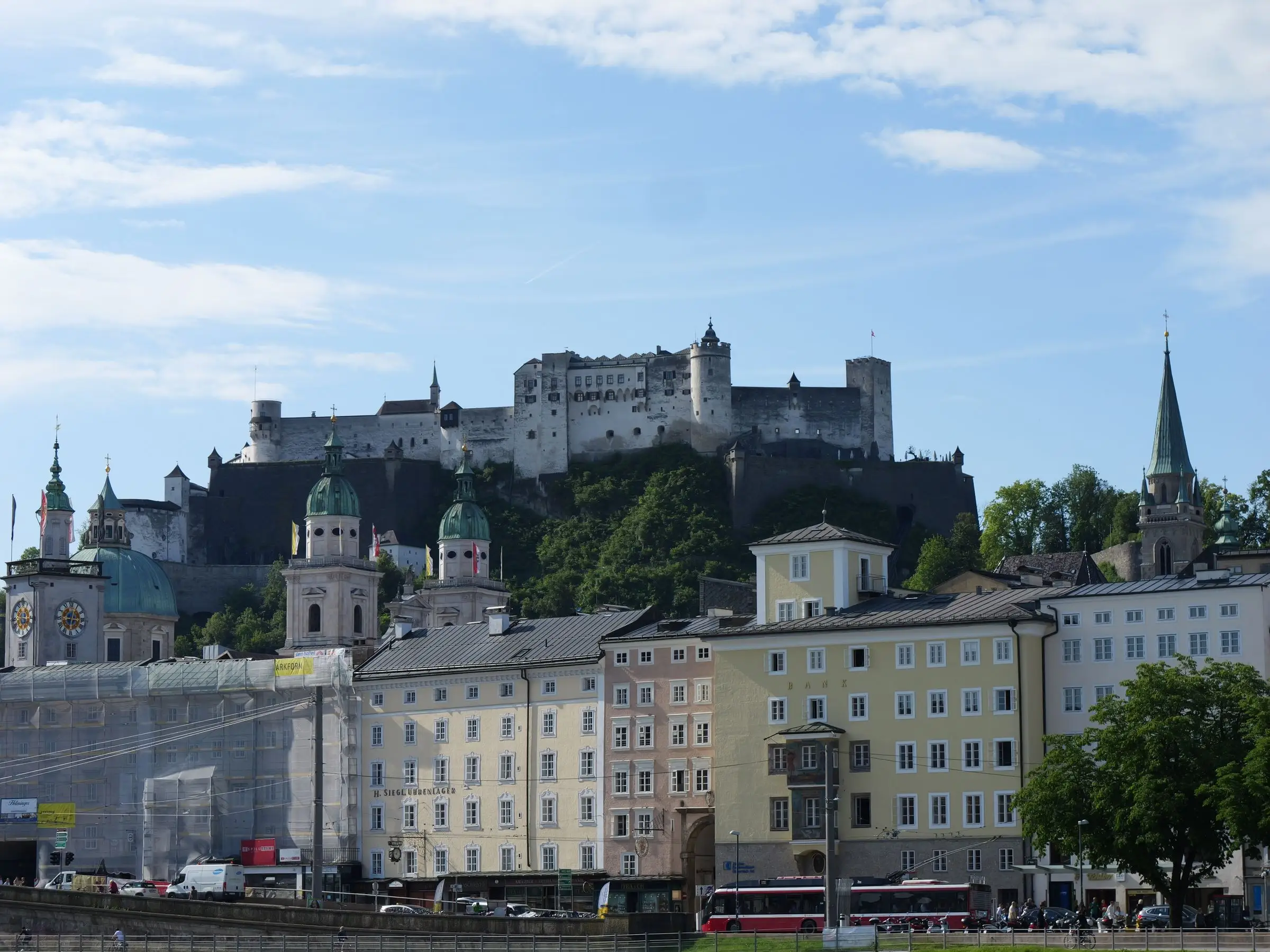 Plan your tripSalzburg to HallstattHow to get from Salzburg to Hallstatt by bus, by train and ferry, by car, on a day tour or by transfer, and whether a day trip from Salzburg is realistic.
 Plan your tripVienna to HallstattVienna to Hallstatt by train via Attnang-Puchheim and the ferry, by car or on a tour, with an honest answer on whether a day trip from Vienna works.
 Plan your tripMunich to HallstattHow to get from Munich to Hallstatt by train via Salzburg, by car with the Austrian vignette, or on a tour, and why one night beats a day trip.
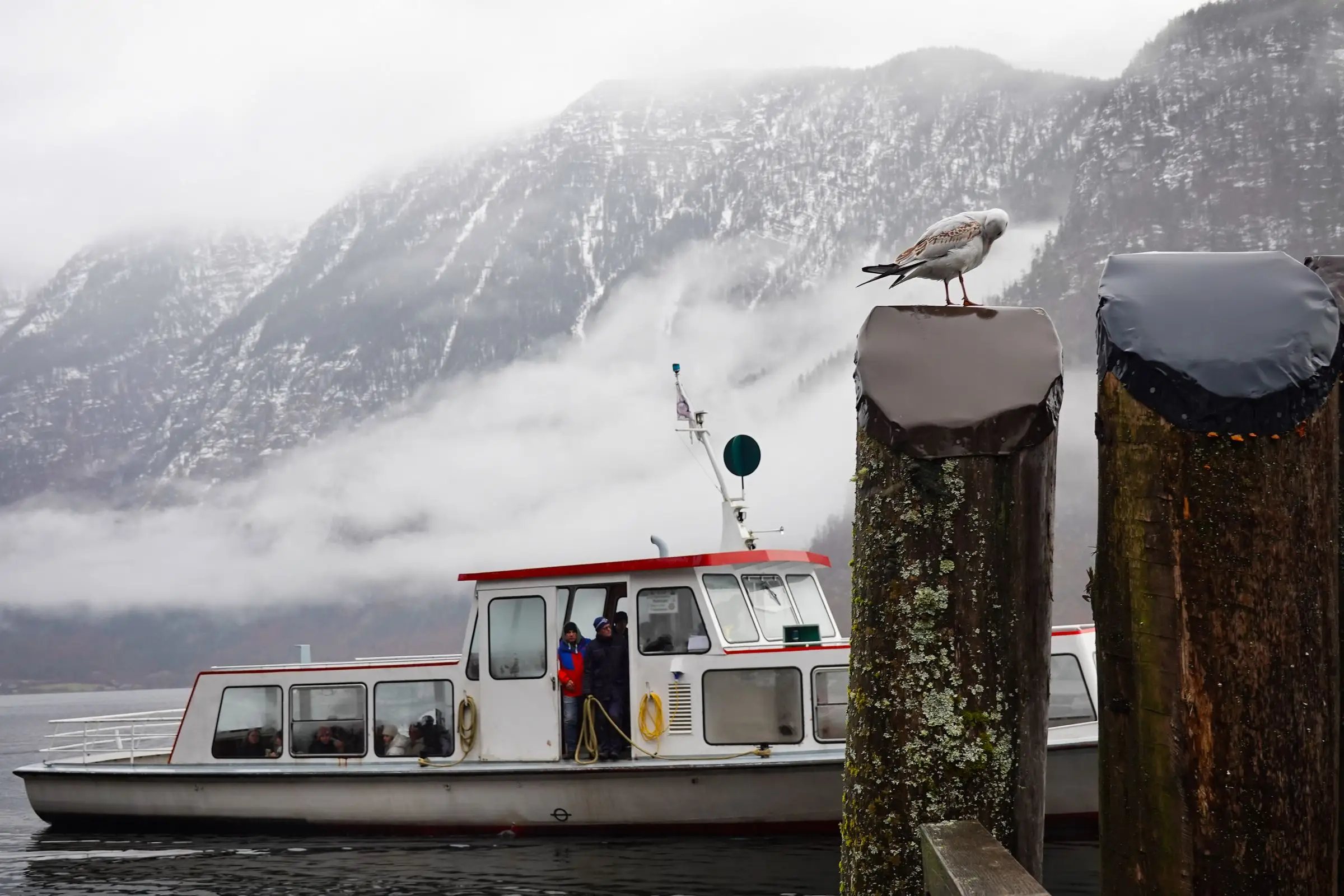 Plan your tripTrain station & ferryHallstatt station is across the lake. How the ferry to the village works, fares and the cash rule as of November 2026, and how not to miss the last boat.
 Plan your tripDay tour vs DIYBooked day tour or going on your own from Salzburg or Vienna? Time in the village, flexibility, transport and our verdict for each city.
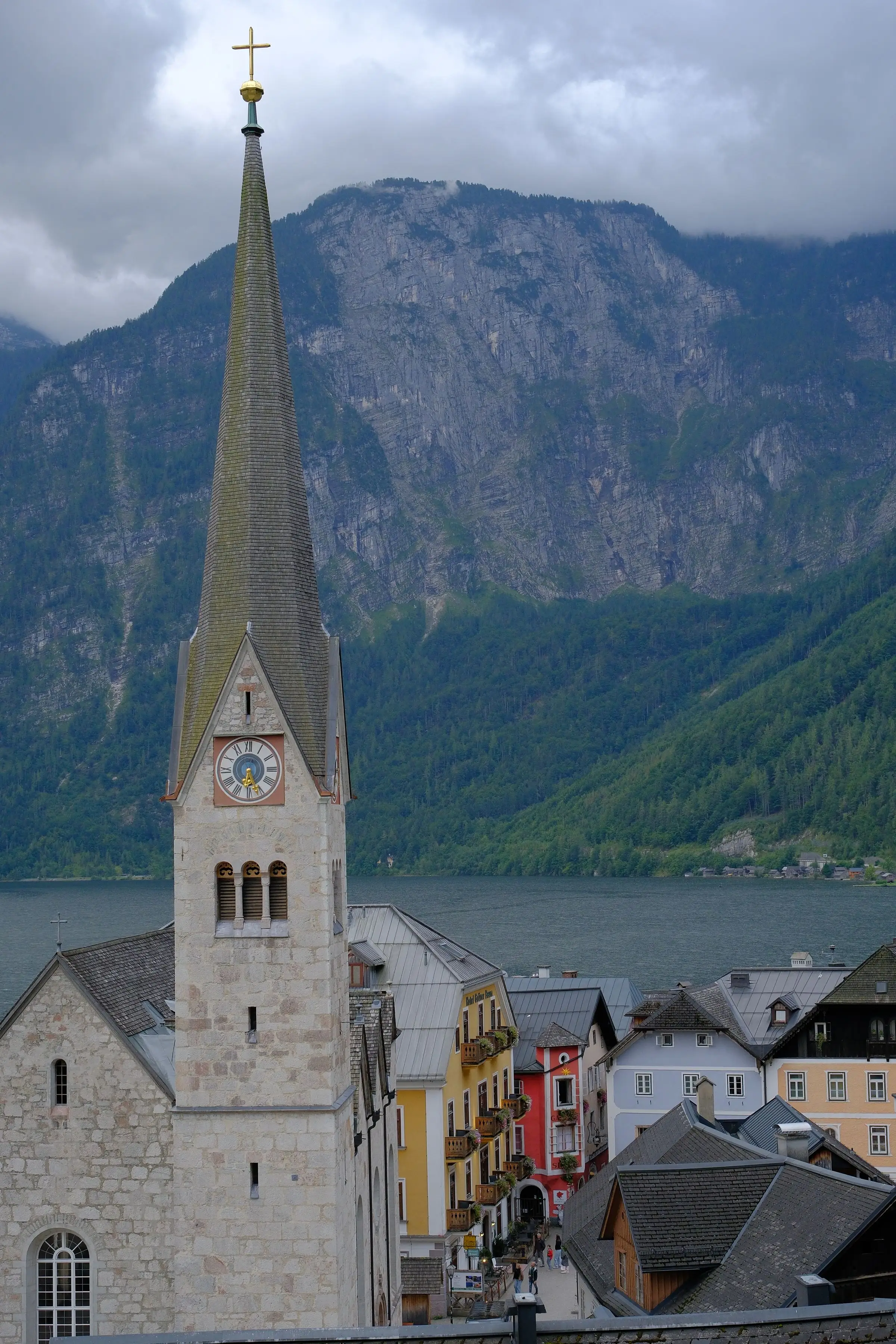 Plan your tripWhere to stayVillage, Obertraun, Gosau, Bad Goisern or Bad Ischl? How each base works for transport, parking, lake views and budget, and who it suits.
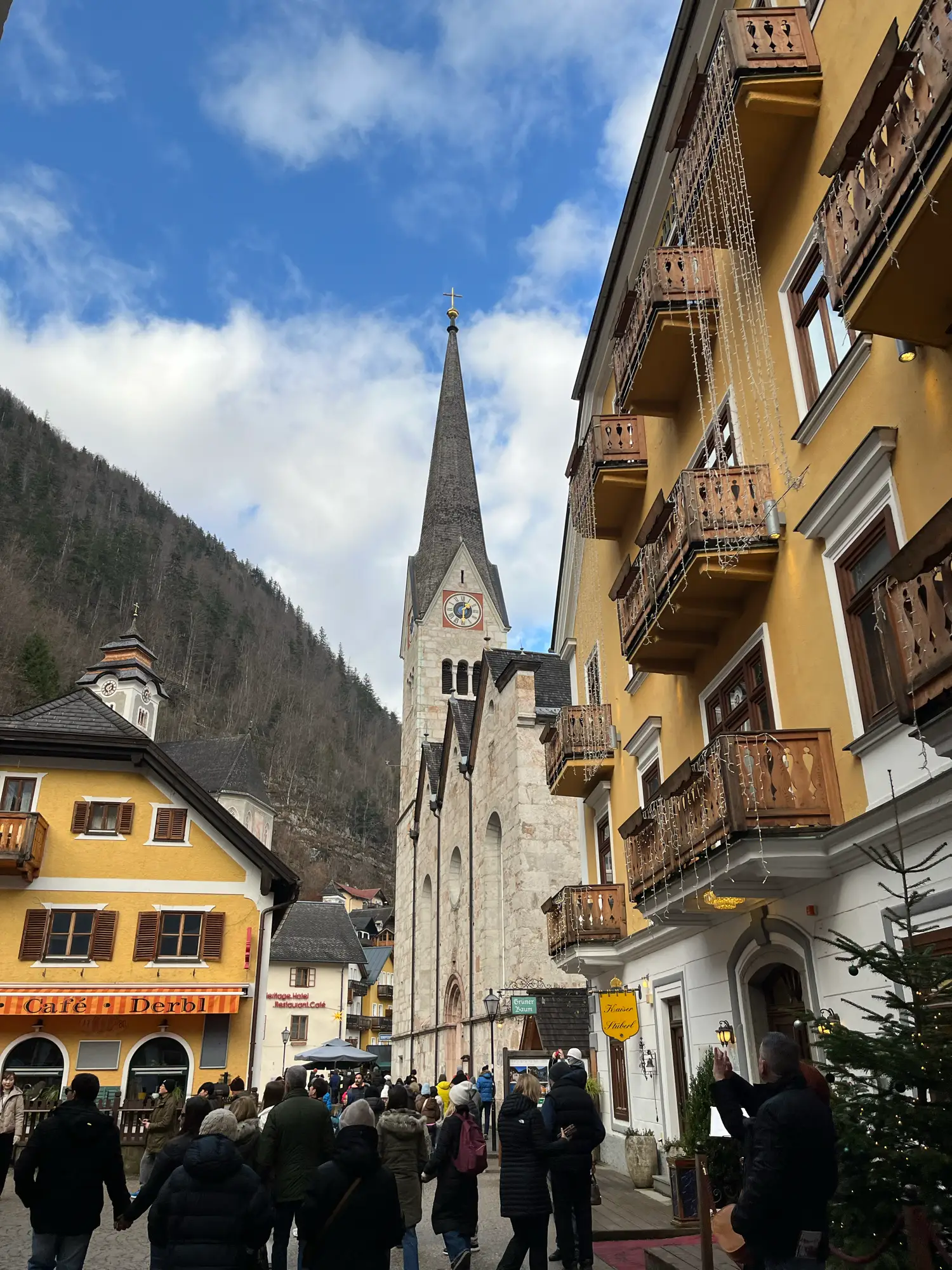 Plan your tripIs Hallstatt expensive?Sourced prices for the salt mine, funicular, ferry and parking, what drives hotel costs, and practical ways to spend less in Hallstatt.
 Plan your tripDay tripsDachstein, Gosausee, Bad Ischl, St. Wolfgang, Salzburg, Altaussee and Gmunden: how to reach each from Hallstatt and when to go.
 Plan your tripHallstatt vs St. WolfgangSetting, sights, crowds, access from Salzburg and winter options compared, with a clear verdict on which Salzkammergut lake village suits you.